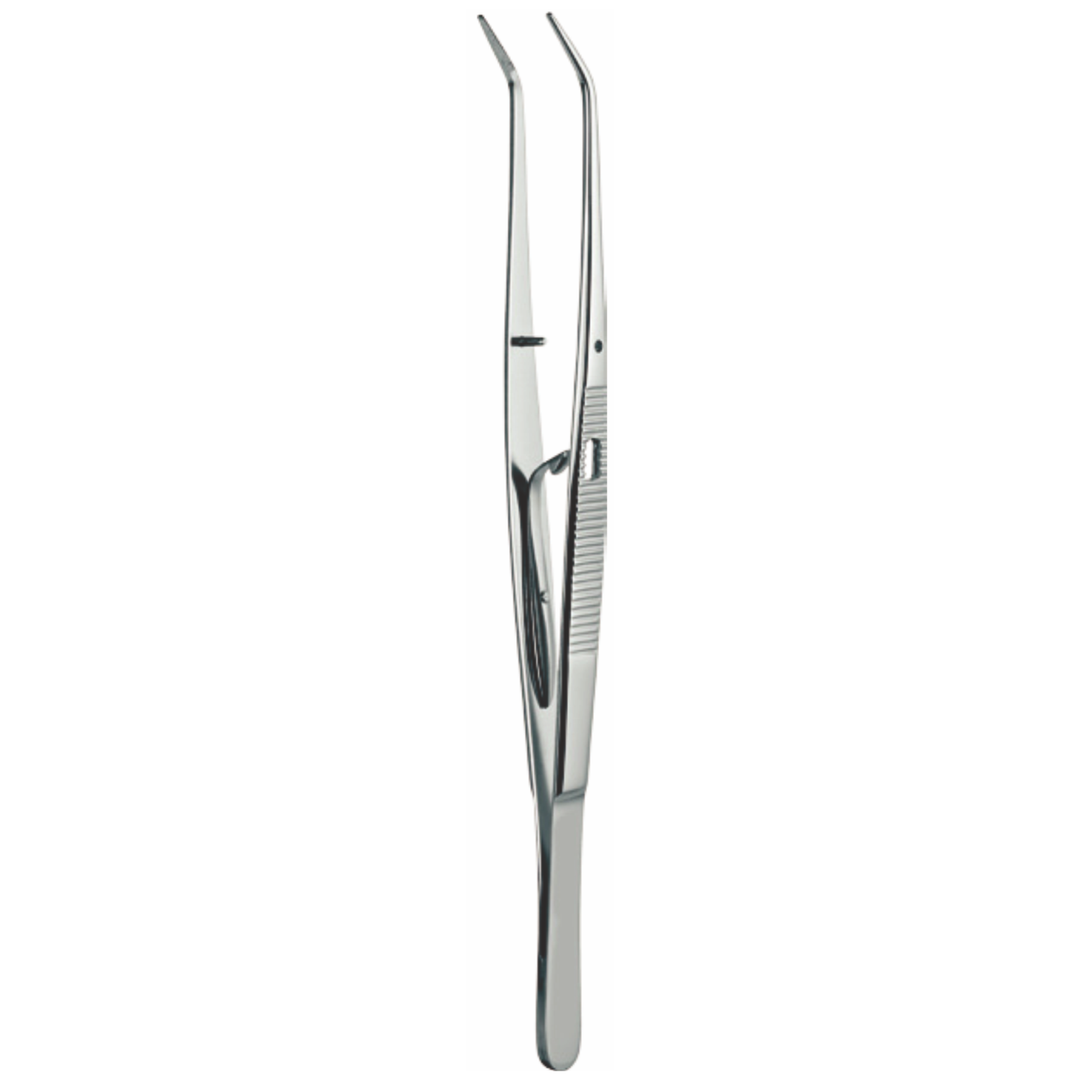
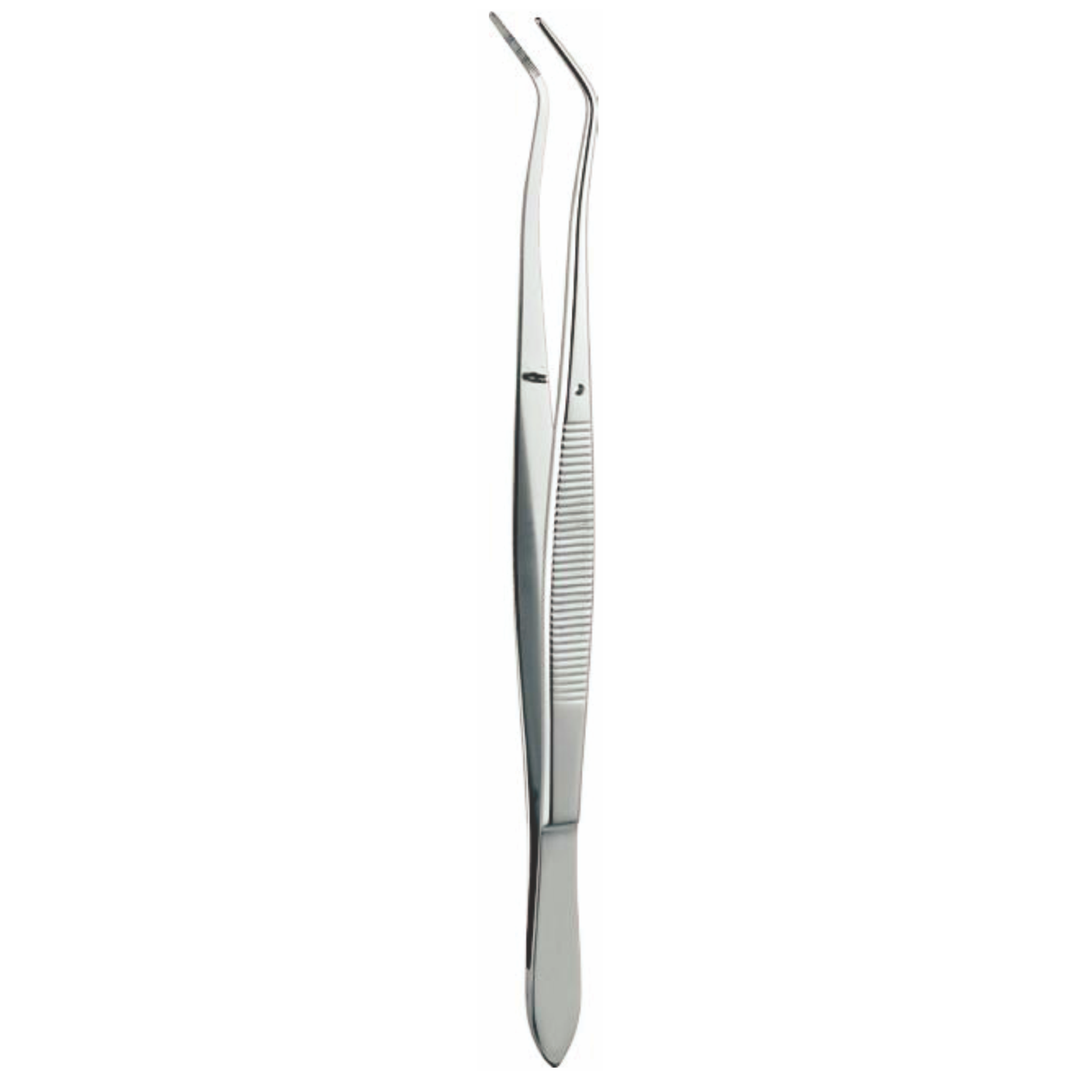
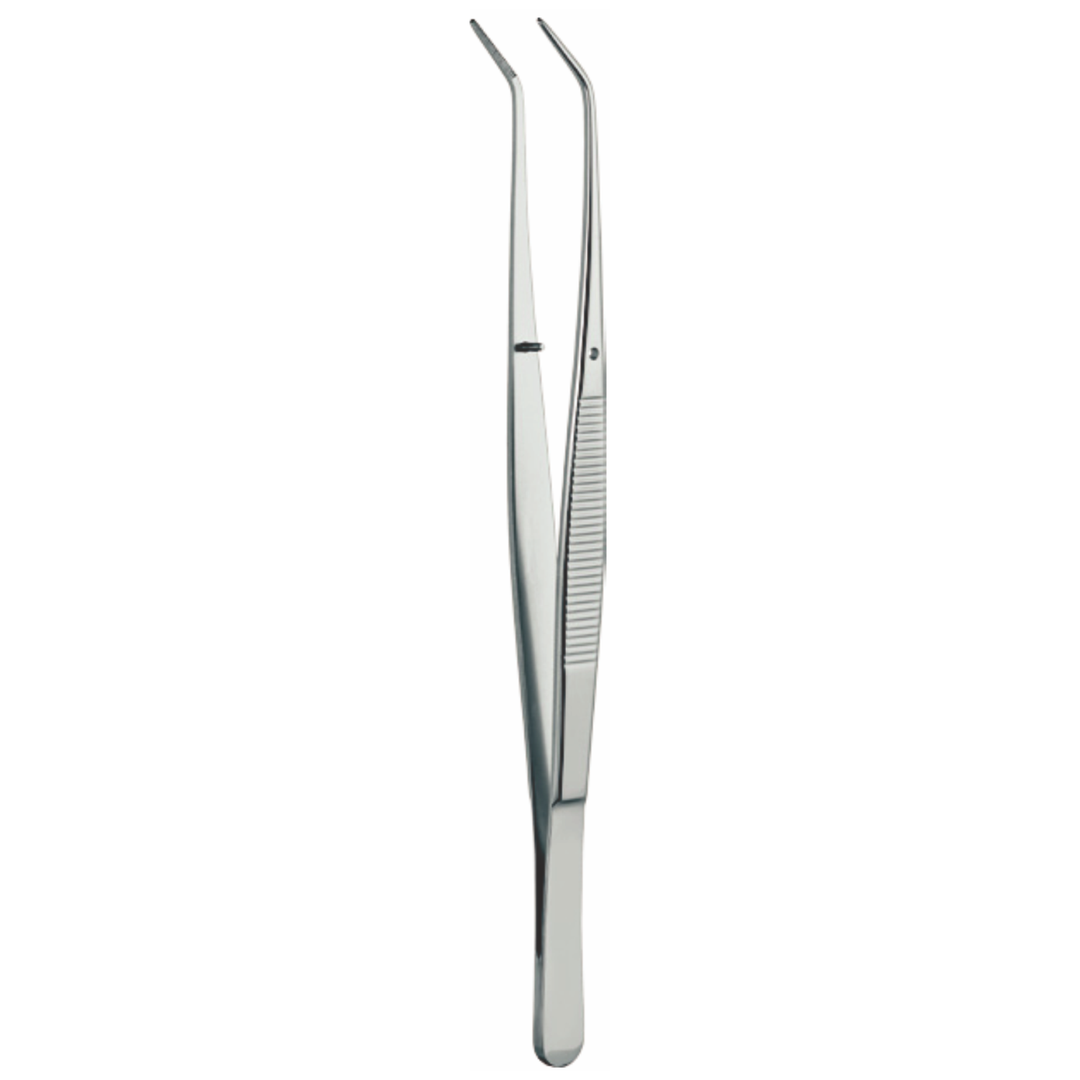
Surgical forceps are among the most frequently used instruments in the practice and the OR. Here you will find medical forceps for grasping tissue, swabs and suture material: surgical forceps with teeth by Hunter, Feilchenfeld, Grünwald, Lucae and Jansen, the atraumatic DeBakey forceps, standard forceps with a tungsten carbide insert, dental tweezers by College, London College, Meriam and Perry, and gynaecological uterine forceps. All instruments are reusable, made of stainless steel and autoclavable at up to 134 °C.
Surgical, anatomical or atraumatic forceps?
| Type | Tip | Use |
|---|---|---|
| Surgical forceps | teeth (e.g. 1:2) | holding skin, fascia and firm tissue securely, also while suturing |
| Anatomical forceps | cross-serrated, no teeth | swabs, dressings and less delicate tissue |
| Atraumatic forceps (DeBakey) | fine longitudinal serrations | vessels, bowel and delicate tissue without crushing |
| Dental tweezers (College, Meriam, Perry) | angled, fine or serrated | cotton rolls, filling material and small parts in the mouth |
| Uterine forceps (Pelkmann, Bozemann, Somer, Collin) | long, ring handle | gynaecology, grasping swabs and tissue at depth |
What to look for when buying
- Tip to match the tissue: teeth hold securely but cause more trauma. For vessels and thin mucosa, atraumatic serrations are better.
- Length: 12 to 16 cm for skin and the mouth, longer forceps for deep surgical fields.
- Spring tension: good forceps close without much effort and the tips meet precisely.
- Tungsten carbide insert: wears more slowly and holds needles and tissue with extra grip.
Our guide Surgical forceps: types and differences explains the individual models. Splinter and orthodontic tweezers are in Tweezers. Goes well with: needle holders and surgical scissors.
Frequently asked questions about surgical forceps
What is the difference between surgical and anatomical forceps?
Surgical forceps have small teeth at the tip that interlock and hold tissue firmly. Anatomical forceps only have cross serrations. They are gentler on tissue but hold less firmly.
What are DeBakey forceps used for?
For vessels and delicate tissue. The fine longitudinal serrations hold securely without crushing the tissue, which is why they are also called atraumatic forceps.
Which forceps do you need in a dental practice?
For chairside treatment, angled dental tweezers by College or Meriam are usually enough. For oral surgery, add fine surgical forceps, for example Hunter forceps or standard forceps with a tungsten carbide insert.
Are the forceps autoclavable?
Yes. All forceps and uterine forceps are made of stainless steel and can be autoclaved at up to 134 °C.