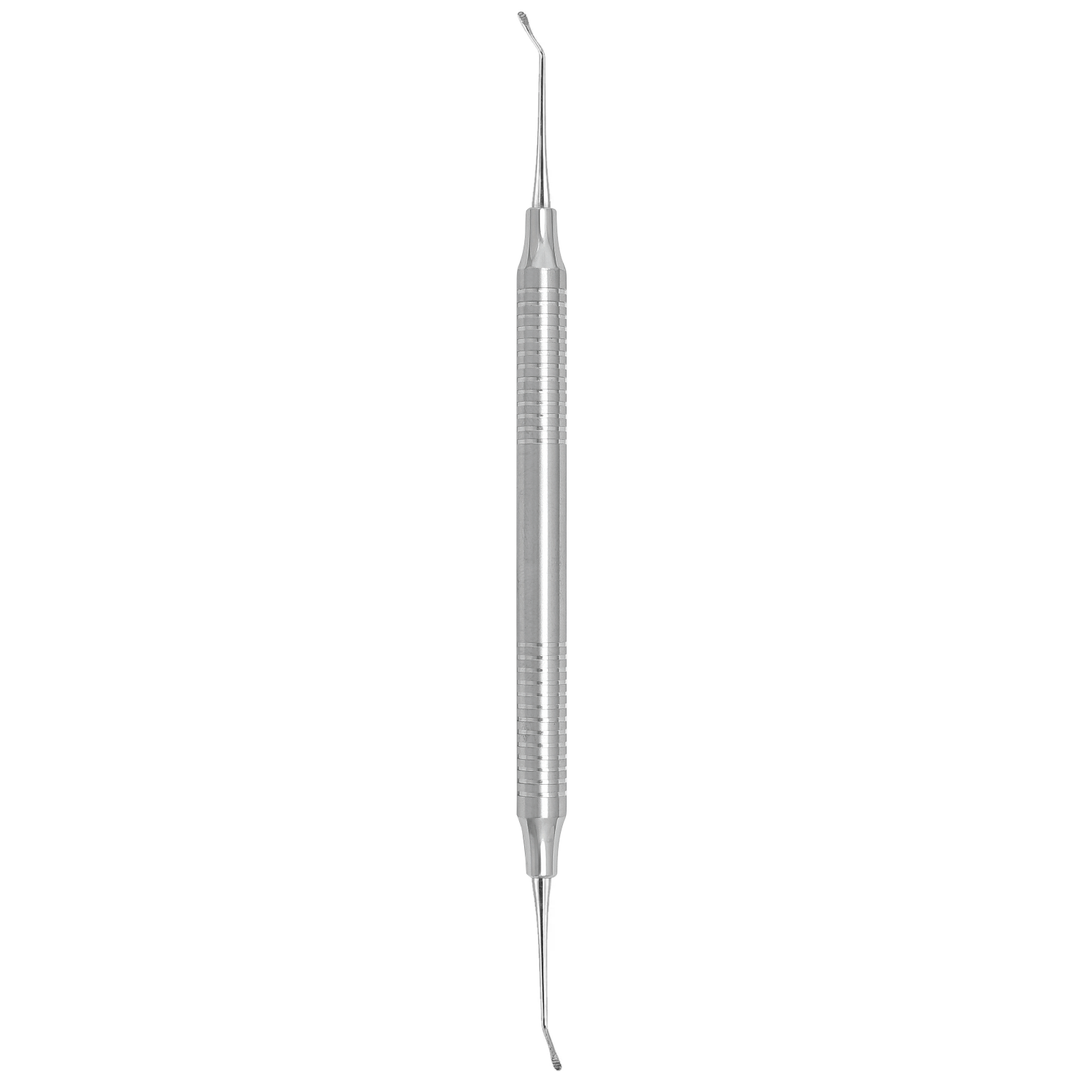
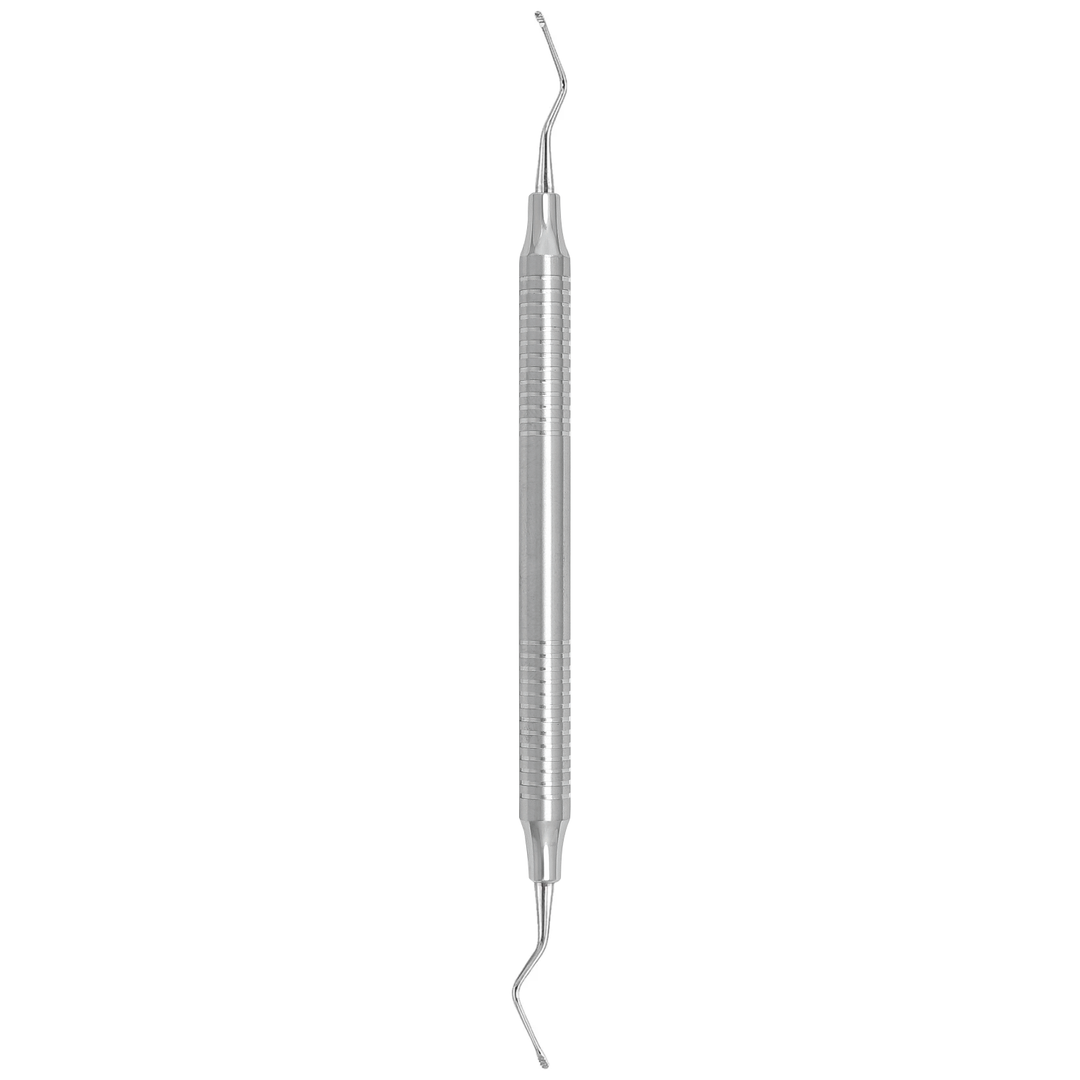
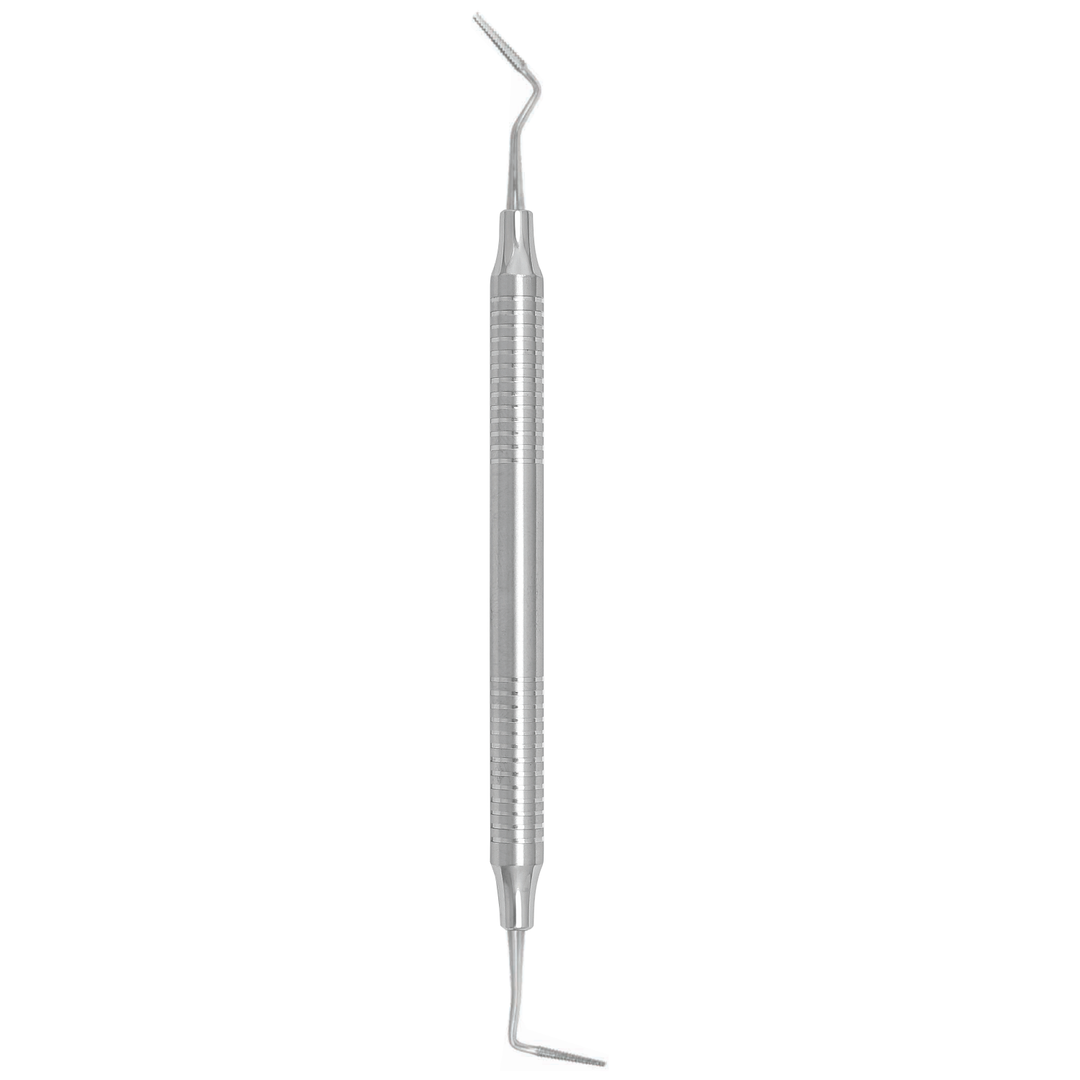
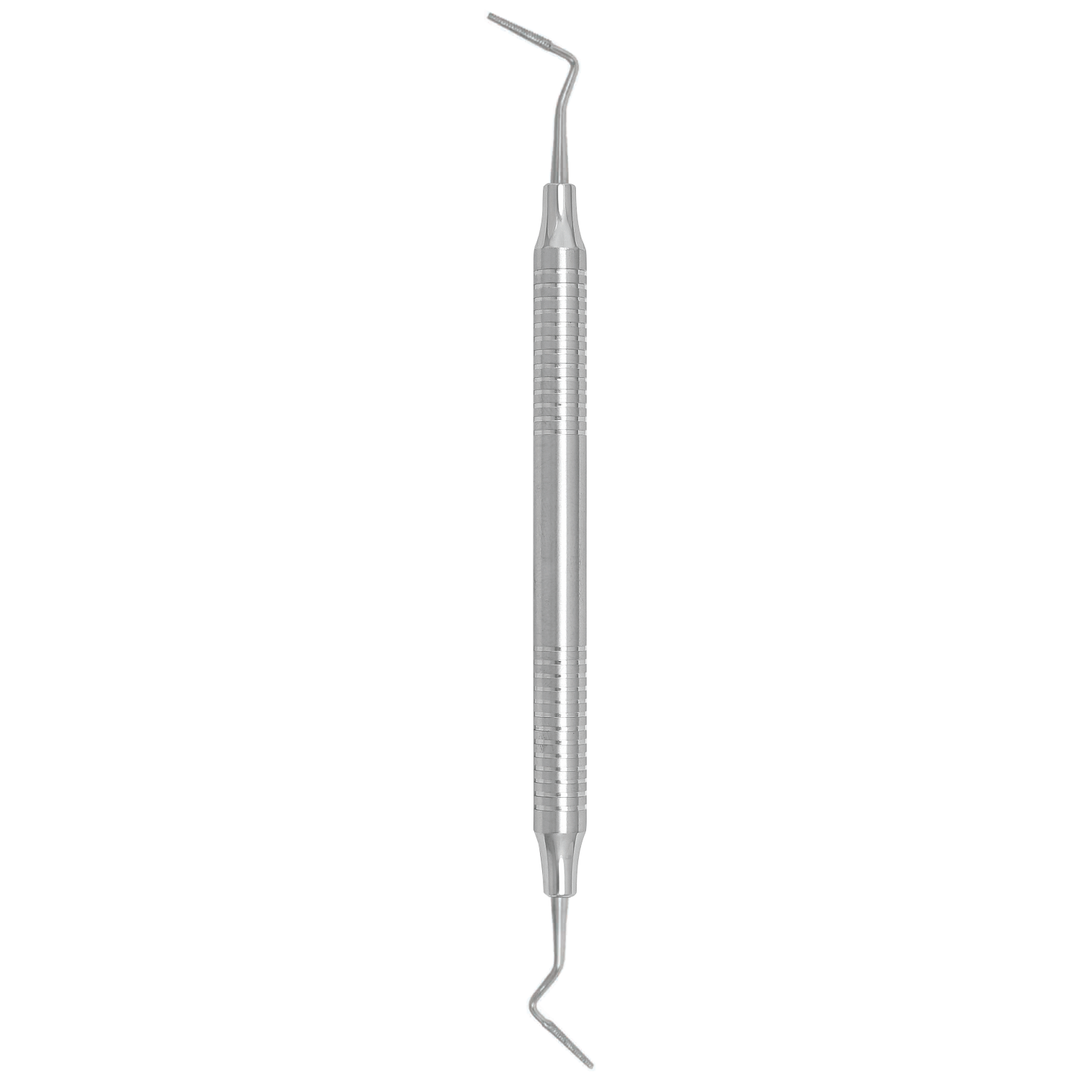
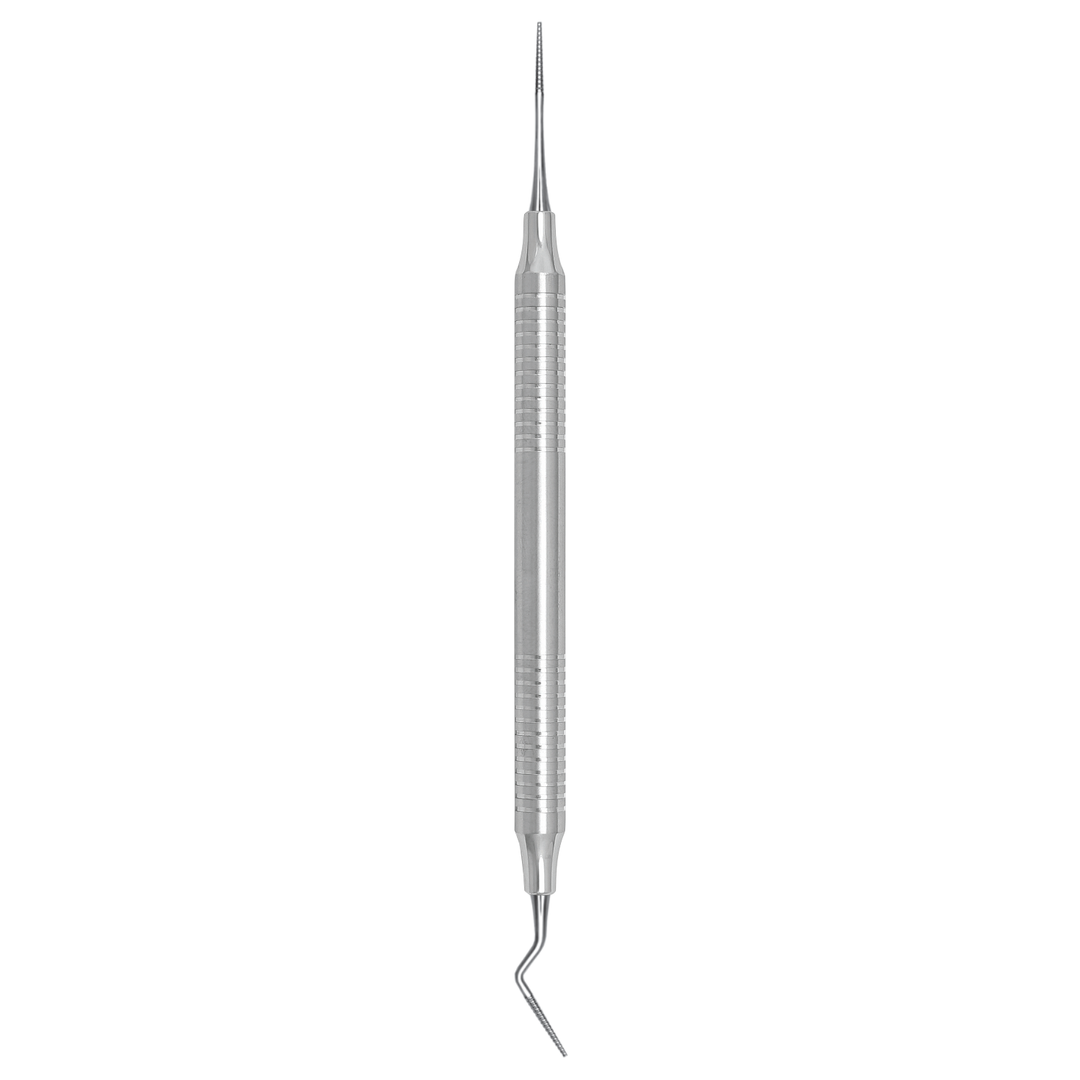
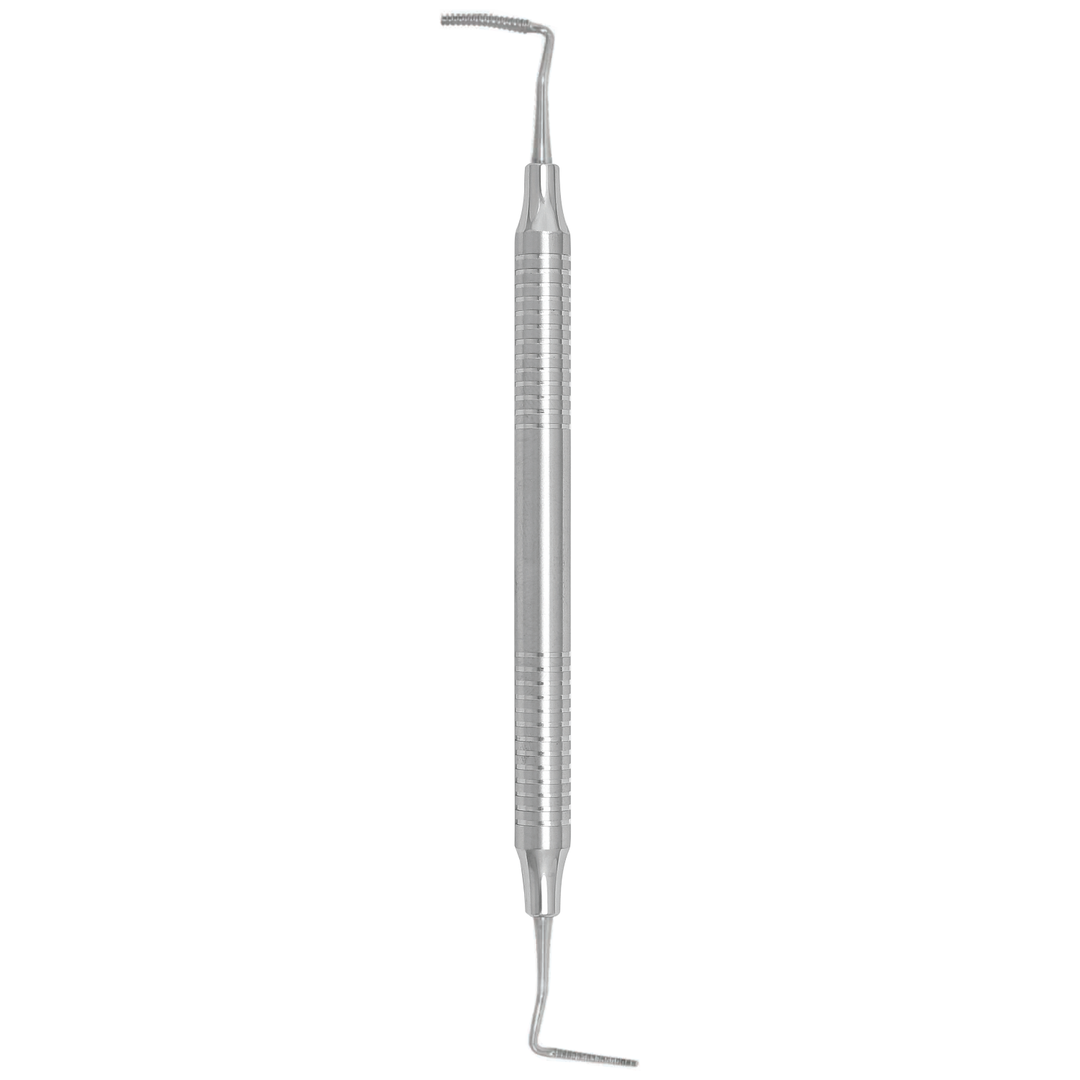
Periodontal chisels and periodontal files complement curettes and scalers in periodontal therapy. Chisels remove stubborn supragingival calculus, especially in the anterior region. Files break up tenacious deposits before they are removed with the curette. All instruments are made of stainless steel and can be autoclaved at up to 134 °C.
Range at a glance
| Instrument | Models | Use |
|---|---|---|
| Periodontal chisels | FEDI3, TG, 13K/13KL | heavy calculus, especially on anterior teeth; push stroke from labial to lingual |
| Chisel with titanium plasma tip | 13K/TG | coated tip for a longer service life |
| Hirschfeld periodontal files | 3/7, 5/11 | breaking up deposits on root surfaces |
| Sugarman periodontal files | 1S/2S, 3S/4S | slim files for narrow pockets |
| Buck and Schluger periodontal files | 11/12, 9/10 | interdental and hard-to-reach surfaces |
| Sets | file set of 3, chisel set of 10 in a cassette | cheaper than buying singly, complete equipment |
Chisel, file or curette?
The chisel has a straight edge and is pushed. It is suitable for heavy deposits on accessible surfaces. The file has several cutting edges in a row and is pulled. It breaks up deposits but does not smooth the root. For final root planing, use a curette. Our guide Scaler or curette? explains the difference between scaler and curette.
Sharpness and care
Chisels and files only work reliably when sharp. Check the edges regularly. After treatment, clean, reprocess and sterilise at up to 134 °C, ideally in a cassette so that the edges do not knock against each other.
Goes well with: curettes and scalers, periodontal probes, gum scissors and the periodontics overview.
Frequently asked questions
What is a periodontal chisel used for?
For removing heavy calculus, especially on the lower anterior teeth. The chisel is placed and guided through the interdental space with a pushing motion.
Do periodontal files replace the curette?
No. Files break up tenacious deposits. You then smooth the root surface with the curette.
Are the instruments autoclavable?
Yes, all chisels and files are made of stainless steel and can be autoclaved at up to 134 °C.